

Cabin vs cottage
Cabin and cottage often describe the same building. Which word you hear depends mostly on where you are, a little on how it is built, and hardly at all on its size.
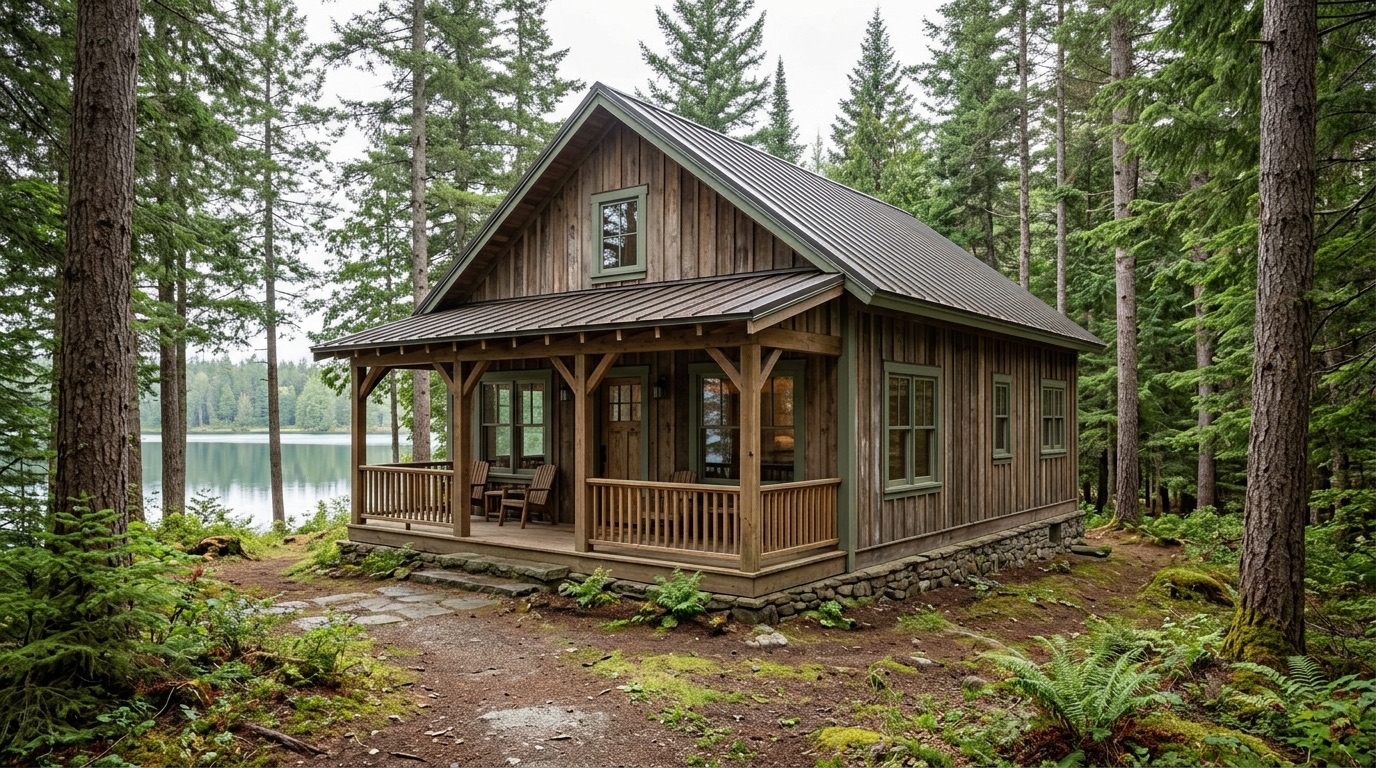
Ask ten people for the difference and you will get a map rather than a definition. The two words grew up in different places and have been drifting toward each other ever since.
That is the short answer, and it is most of the answer. A cabin and a cottage are very often the same building: small, simple, somewhere quiet, used for part of the year. What changes is the word, and the word changes at something close to a border. This guide covers where that border runs, where the two words came from, the small real differences that remain, and which one to type when you are looking for plans.
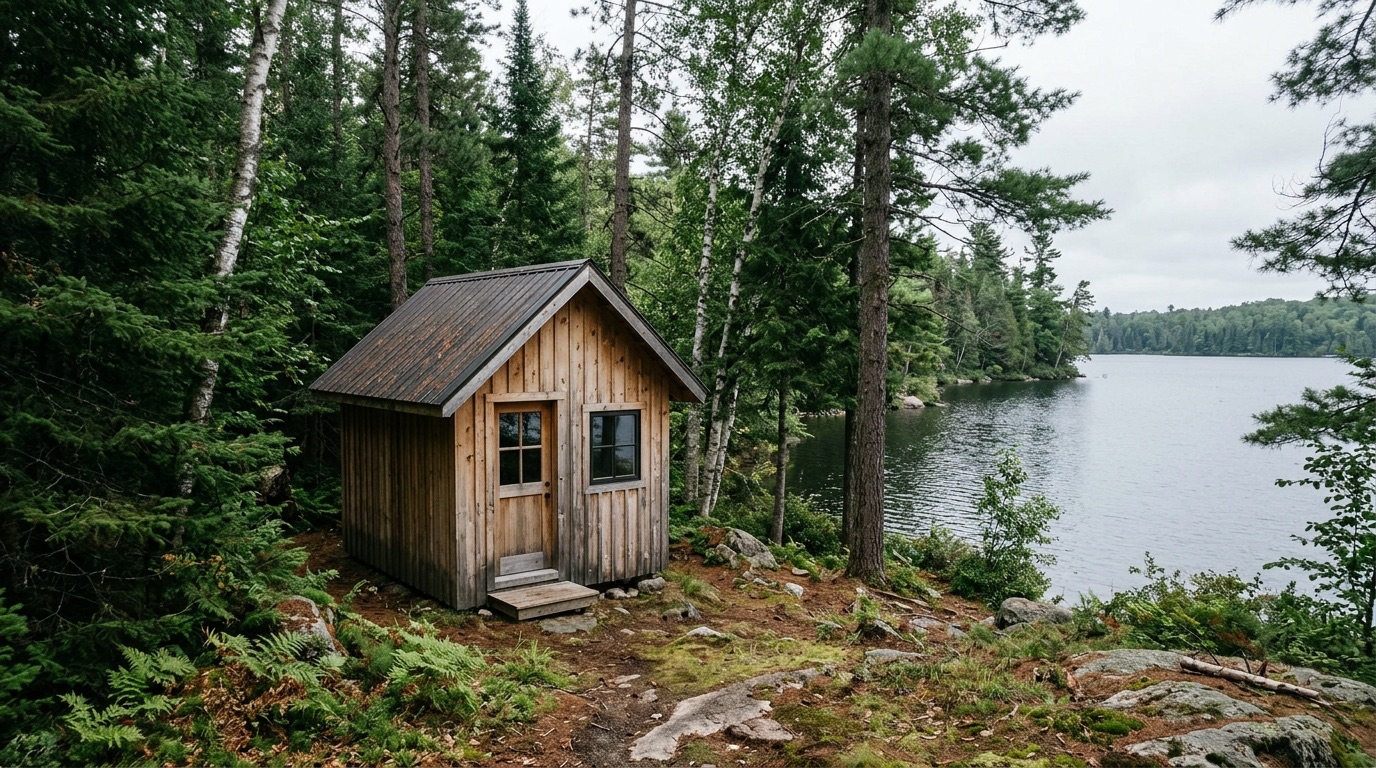
It is mostly geography
In the United States, cabin is the everyday word for a small place in the woods, in the mountains or by a lake. Cottage exists, but it tends to mean something more specific: a shingled summer house on the New England coast, or a small, pretty house in town.
Canada splits. In southern Ontario the building is a cottage, the region is cottage country, and the Friday drive is going to the cottage, whatever its size. Cross into Manitoba and the same trip is going to the lake, and the building at the end of it is a cabin. Saskatchewan, Alberta and British Columbia say cabin too.
- Cabin. The United States, the Prairies, British Columbia, the North and Newfoundland.
- Cottage. Southern Ontario, Prince Edward Island, mainland Nova Scotia, Britain and Ireland.
- Camp. Northern Ontario, New Brunswick, Maine and northern New England, and the Adirondacks.
- Chalet and bungalow. Chalet in Quebec and in the French and Swiss Alps. Bungalow on Cape Breton Island.
- The Nordic words. Hytte in Norway, stuga in Sweden, mökki in Finland, sommerhus in Denmark, sumarbústaður in Iceland.
- Further south. Hütte in Germany and Austria, chata in Czechia, baita in the Italian Alps, cabaña in Spain.
- Australia. Shack, whether it is on a beach or in the bush.
- New Zealand. Bach, or crib in the far south of the South Island.
The local words
Then there are the places with a word of their own.
Camp. Northern Ontario, New Brunswick, Maine and the Adirondacks. A camp can be a one-room hunting shack or a large lakeside house with a boathouse. The word says nothing about size.
Chalet. Quebec. In French it covers nearly any country place, with or without a ski hill nearby.
Bungalow. Cape Breton, where it means a summer place by the water rather than a one-storey house.
Cabin. Newfoundland, where it is the usual word across the island.
Britain uses cottage for a small country house of any age, and most of them are lived in all year. A British cottage is a kind of house. A Canadian cottage is a kind of weekend.
How people say it
The words even behave differently in a sentence. Ontarians go to the cottage, with a definite article, as if there were only one. Manitobans go to the lake. Northern Ontarians go to camp, with no article at all. Americans go up to the cabin. You can often place someone within a few hundred kilometres by how they describe their weekend.
The same idea in other languages
Most countries have one word for the small second home and no argument about it. Norwegians have the hytte, Swedes the stuga, Finns the mökki and Danes the sommerhus. Further south it is a Hütte in Germany and Austria, a chata in Czechia, a baita in the Italian Alps and a cabaña in Spain, with the Russian dacha just off the edge of the map. English elsewhere went its own way too: Australians have the shack and New Zealanders the bach, or the crib in the far south.
Where the two words came from
Neither word began as anything you would aspire to.
Cabin: a hut
Cabin came into English in the Middle Ages from the French cabane, which goes back to the Late Latin capanna, a hut. For centuries it meant a rough, temporary shelter, and it picked up a second life at sea as a room on a ship.
The link with logs came later and from somewhere else. Building with stacked, notched logs is a northern European craft, and the usual account is that Swedish and Finnish settlers brought it to the Delaware valley with the colony of New Sweden, founded in 1638. It suited a continent full of trees and short of sawmills, and it spread with the frontier.
By 1840 the log cabin was familiar enough for William Henry Harrison to run for president on it, as a badge of plain living. A poor man's house had become a national symbol. If the craft itself is what interests you, how to build a log cabin covers it.
Cottage: a cotter's house
Cottage comes from cot or cote, old English words for a small house or shelter. In medieval England a cottage was the dwelling of a cotter, a labourer who held a house and a scrap of land in return for work. It was the bottom rung of rural housing.
Then fashion got hold of it. From the late 1700s, well-off English families began building deliberately rustic retreats and calling them cottages. A century later the habit had crossed the Atlantic and lost all restraint. The summer houses that the richest American families built at Newport, Rhode Island, were known as cottages. The Breakers, finished for the Vanderbilts in 1895, has around seventy rooms.
Ontario's cottage arrived in the same decades, when steamers and railways opened the Muskoka lakes to summer visitors from the cities. Most of what they built was modest. The word they used was the fashionable one.
Both words began as the cheapest house in the district. Both now describe something people save for years to own.
Construction plays a small part
History left each word with a flavour, and the flavour is about how the thing is built.
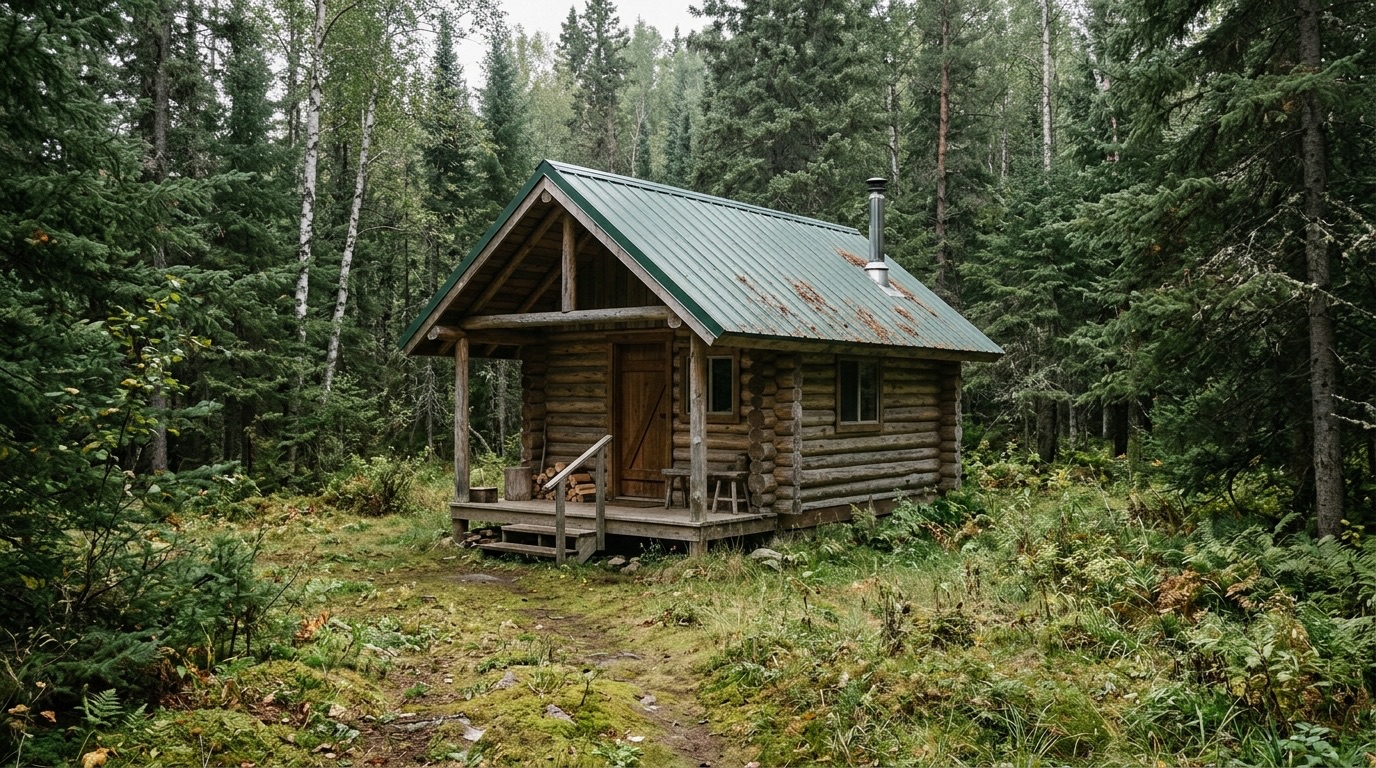
Cabin carries a hint of rough timber. A log cabin is a cabin everywhere, including in the middle of Ontario cottage country. The word suggests a simple shape, a low roof, structure left on show and a stove.
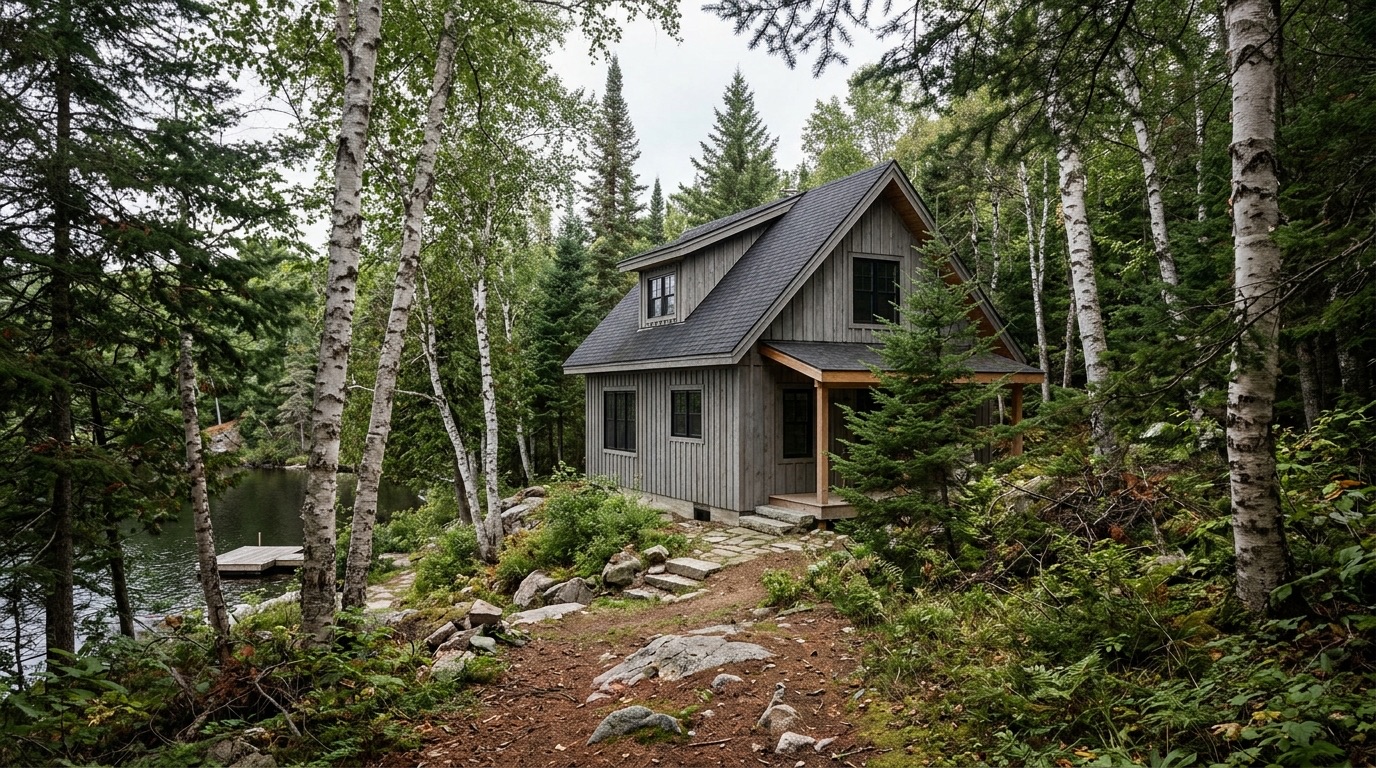
Cottage suggests a frame building with a gabled roof, board siding, painted trim, a porch and a slightly more finished inside. It is the word you reach for when there are curtains.
- ALog or rough board walls. The structure is on show, inside and out.
- BLow roof, wide eaves. A plain shape that keeps rain off the walls.
- CStovepipe. Wood heat, and often not much else.
- DCovered porch. The room most cottage life happens in.
- EBoard siding and trim. Painted or stained, over an ordinary frame.
- FLarger, divided windows. Usually pointed at the water.
These are leanings, not rules. A dark, flat-roofed modern box in the trees is a cabin to its architect. A log building with a wraparound porch on a Muskoka lake is a cottage to its owners. Where construction and geography disagree, geography usually wins.
Leaning | Cabin | Cottage |
|---|---|---|
Walls | Logs or rough boards | Board siding over a frame |
Roof | Low and plain, or a steep A-frame | Gable, often with a dormer |
Outside room | A stoop or a deck | A covered or screened porch |
Inside | Wood left on show | Painted or panelled |
Heat | A wood stove | A stove plus something else |
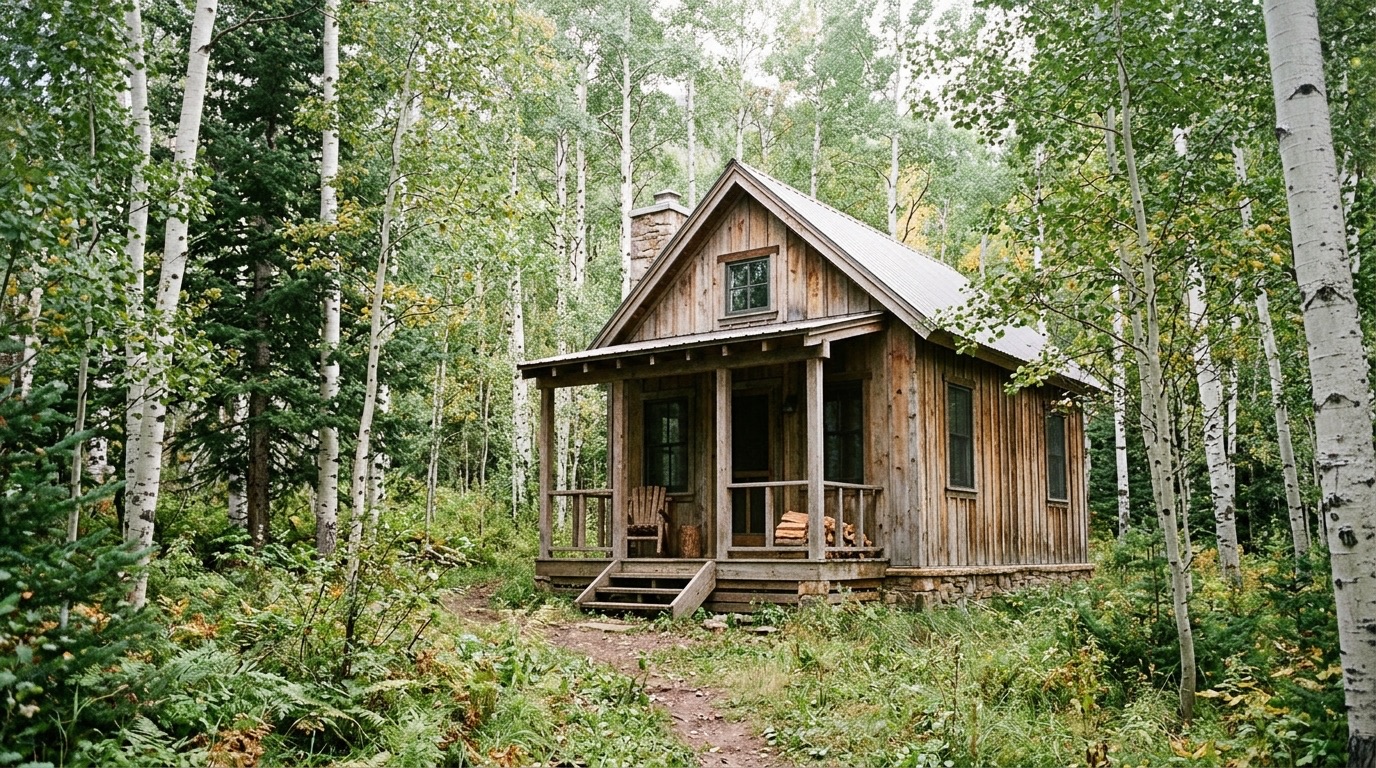
The Heron
- Footprint
- 20 × 30 ft
- Floor area
- 600 sq ft · 55.7 m²
- Beds / baths
- 2 bed · 1 bath
- Loft
- No loft
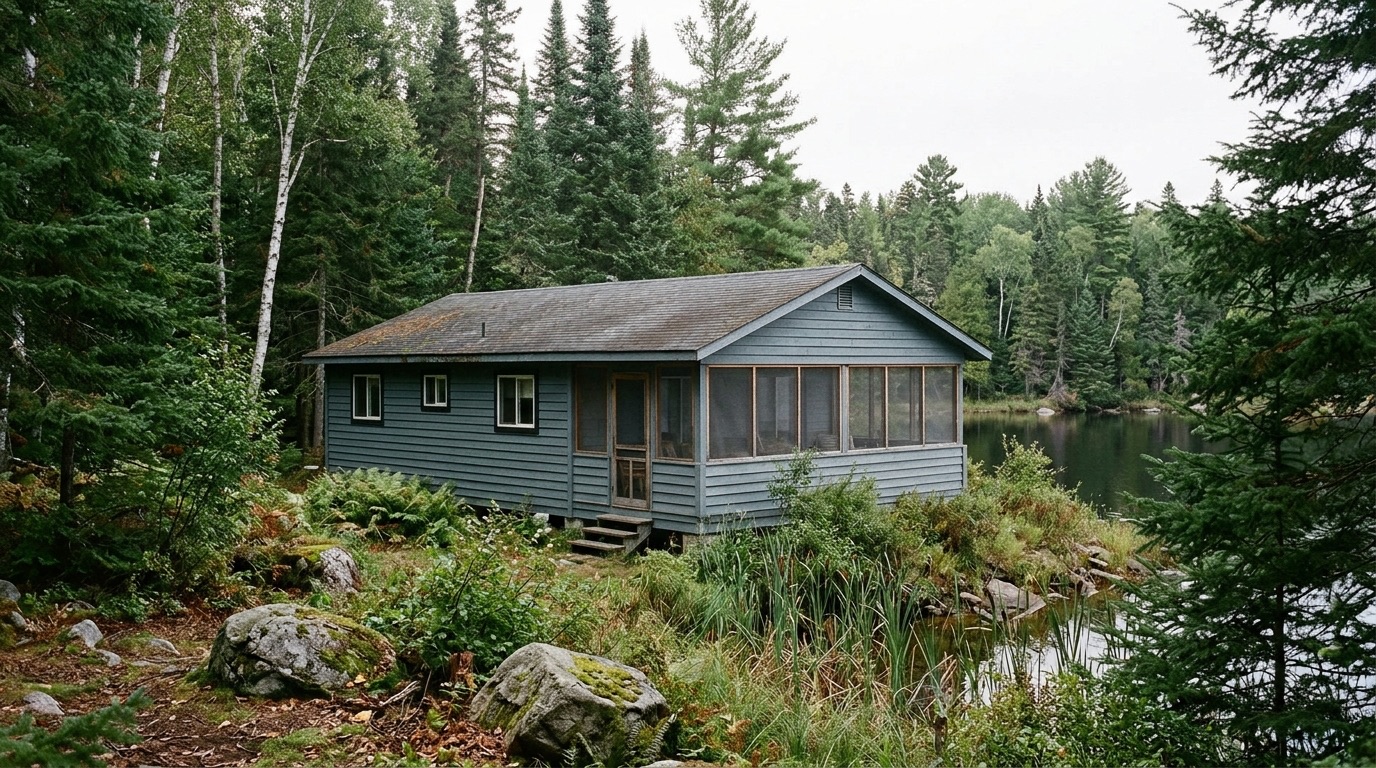
The Alder
- Footprint
- 16 × 24 ft
- Floor area
- 384 sq ft · 35.7 m²
- Beds / baths
- 2 bed · 1 bath
- Loft
- Sleeping loft
Setting and use
Setting does some sorting. A cottage is nearly always beside water: a lake, a river or the sea. A cabin can be anywhere remote, and the word follows it up mountains, into hunting country and out to the end of logging roads, where no one would think to say cottage.
Use is where the words agree. Both are usually second homes, opened in spring and closed in autumn, which is why both tend to be small and simply serviced. Water may come from the lake. Heat may be a stove. The plumbing may be drained every October. Our off-grid cabin guide covers those systems.
How finished is it
If you want an axis that does separate the words, try finish rather than size. At the rough end is the camp in its older sense: bunks, a stove, an outhouse. At the other is the lake house, which is a full house that happens to have a dock. Cabin and cottage sit side by side in the middle and overlap almost completely.
Size is not the difference
Neither word sets a size. There are one-room cottages and five-bedroom cabins, and Newport settled long ago that a cottage has no upper limit. On this site the plans run from 192 to 800 sq ft (17.8 to 74.3 m²) whichever word you prefer.
If anything, small is what the two words share. Both promise less house than you live in the rest of the year, and for most owners that is the point.
What the rules and the listings call it
Here the argument stops mattering. Building departments, zoning bylaws, insurers and lenders do not much care which word you use. They have their own vocabulary, and it describes what the building does.
Use. Is it a dwelling, or a building accessory to one? A sleeping cabin beside a house is treated differently from a house, as the bunkie guide explains.
Season. Is it built and serviced for year-round living, or for seasonal use only? This can affect the standard it must meet and whether a lender treats it like a house.
Size and height. Floor area, storeys and height decide which rules apply and whether a permit is needed.
Services. Plumbing, septic, a well and electrical service each bring their own approvals.
Access. A place on a ploughed public road is one thing. A place reached by boat or a private track is another.
A real-estate listing will use whichever word sells in that region, then answer these same questions in the details underneath. Read the details.
Searching for plans
For plans, the two words lead to nearly the same drawings. A search for cottage plans tends to turn up more frame buildings with porches and gables. A search for cabin plans turns up more logs, A-frames and lofts. At small sizes the floor plans underneath are close cousins: one main room, a bedroom or two, a compact bathroom, a porch or a deck.
So search by what you need rather than by the label. These decide far more than the name does:
Floor area and footprint, which set the cost and what your lot and local rules allow.
Bedrooms, and whether a sleeping loft counts as one for you.
The roof, which sets the look and how the building handles snow.
A porch, if evenings outside are the reason you are building.
Every collection in this library is cut along those lines. Start with small cabin plans for size, plans with a porch for the cottage habit of sitting outside, or the log and cottage collections if you already know the look. For the wider family of shapes, see types of cabins.
Which word this site uses
CabinMakr says cabin for the library as a whole and keeps cottage for a style: gabled roof, board siding, porch, lakeside look. Every plan gives its dimensions in feet with metres beside them, so it reads the same on either side of the border.
If your family has always called it the cottage, the camp or the lake, keep calling it that. The drawings do not mind.
How much does it cost to build a cabin?
Set a floor area and a finish level to get a working range before you choose a plan.
Cabin and cottage questions
Is a cottage bigger than a cabin?
Not by definition. Both words cover everything from one room to a full-sized house, and the summer mansions of Newport were called cottages. If there is a real difference it is in finish and setting, not floor area.
What do Canadians call a cabin?
It depends on the province. Southern Ontario says cottage, the Prairies and British Columbia say cabin, Quebec says chalet, and Northern Ontario and New Brunswick say camp. Newfoundland says cabin and Cape Breton says bungalow.
Why do Ontarians say cottage?
The word arrived in the late 1800s, when steamers and railways opened lakes such as Muskoka to summer visitors. Cottage was the fashionable word for a summer place at the time, in Britain and on the American east coast. It stuck, and the region became cottage country.
What is the difference between a cabin and a camp?
Region, mostly. In Northern Ontario, New Brunswick, Maine and the Adirondacks, camp is the ordinary word for a place in the woods or on a lake, of any size. Elsewhere a camp suggests something rougher than a cabin: bunks, a stove and an outhouse.
What is the difference between a cabin and a house?
Mostly use. A cabin or cottage is usually a second, simpler building used for part of the year, though plenty of people live in one full time. Building rules draw the line by use, season and services, not by the name.
Does it matter which word I use on a permit application?
No. A building department looks at the floor area, the height, whether people sleep in it, what services it has and whether it is for seasonal or year-round use. Describe those and let the department classify it. The rules are local, so ask early.
Do I search for cabin plans or cottage plans?
Either. The same plans are filed under both ideas here, and the Cottage collection gathers the ones with the classic look. You will get further by searching on floor area, bedrooms and features such as a porch or a loft.